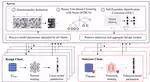
Federated learning trains a shared model without collecting the data, which also exposes it to poisoning: a malicious client can corrupt the global model through the updates it sends. This thesis replicates FedDMC (IEEE TDSC 2024), a detection defense, from the code its paper designates, on MNIST, against four poisoning attacks and three baseline defenses. The published detection can be reproduced, but only after a correction the paper never mentions: the released code trains with the Adam optimizer, and that undocumented default silently breaks detection for two of the four attacks. However, with the SGD optimizer described in the paper, detection is perfect on all four attacks. The replication also documents further gaps between paper and code (a broken data-split flag, swapped metric labels, a different default clustering method), and shows the released baselines are simplified versions of the published methods, so the paper’s comparison cannot be checked from its own artifact. The logs from all 82 complete runs are public in a replication package. The general lesson is that a published defense result needs to be verified by an independent replication before it can be trusted.