Artificial Intelligence
Improving automated unit test generation for machine learning libraries using structured input data

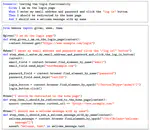
The field of automated test case generation has grown considerably in recent years to reduce software testing costs and find bugs. However, the techniques for automatically generating test cases for machine learning libraries still produce low-quality tests and papers on the subject tend to work in Java, whereas the machine learning community tends to work in Python. Some papers have attempted to explain the causes of these poor-quality tests and to make it possible to generate tests in Python automatically, but they are still fairly recent, and therefore, no study has yet attempted to improve these test cases in Python. In this thesis, we introduce 2 improvements for Pynguin, an automated test case generation tool for Python, to generate better test cases for machine learning libraries using structured input data and to manage better crashes from C-extension modules. Based on a set of 7 modules, we will show that our approach has made it possible to cover lines of code unreachable with the traditional approach and to generate error-revealing test cases. We expect our approach to serve as a starting point for integrating testers’ knowledge of input data of programs more easily into automated test case generation tools and creating tools to find more bugs that cause crashes.
Improving automated unit test generation for machine learning libraries using structured input data
Training machine learning models for vulnerability prediction and injection using datasets of vulnerability-inducing commits

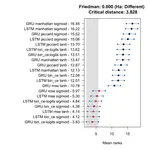
Multiple techniques exist to find vulnerabilities in code, such as static analysis and machine learning. Although machine learning techniques are promising, they need to learn from a large quantity of examples. Since there is not such large quantity of data for vulnerable code, vulnerability injection techniques have been developed to create them. Both vulnerability prediction and injection techniques based on machine learning usually use the same kind of data, thus pairs of vulnerable code, just before the fix, and their fixed version. However, using the fixed version is not realistic, as the vulnerability has been introduced on a different version of the code that may be way different from the fixed version. Therefore, we suggest the use of pairs of code that has introduced the vulnerability and its previous version. Indeed, this is more realistic, but this is only relevant if machine learning techniques can properly learn from it and the patterns learned are significantly different than with the usual method. To make sure of this, we trained vulnerability prediction models for both kind of data and compared their performance. Our analysis showed a model trained on pairs of vulnerable code and their fixed version is unable to predict vulnerabilities from the vulnerability introducing versions. The same goes for the opposite, despite both models are able to properly learn from their data and detect vulnerabilities on similar data. Therefore, we conclude that the use of vulnerability introducing codes for machine learning training is more relevant than the fixed versions.

Training machine learning models for vulnerability prediction and injection using datasets of vulnerability-inducing commits